Magna Carta ELO Rating System
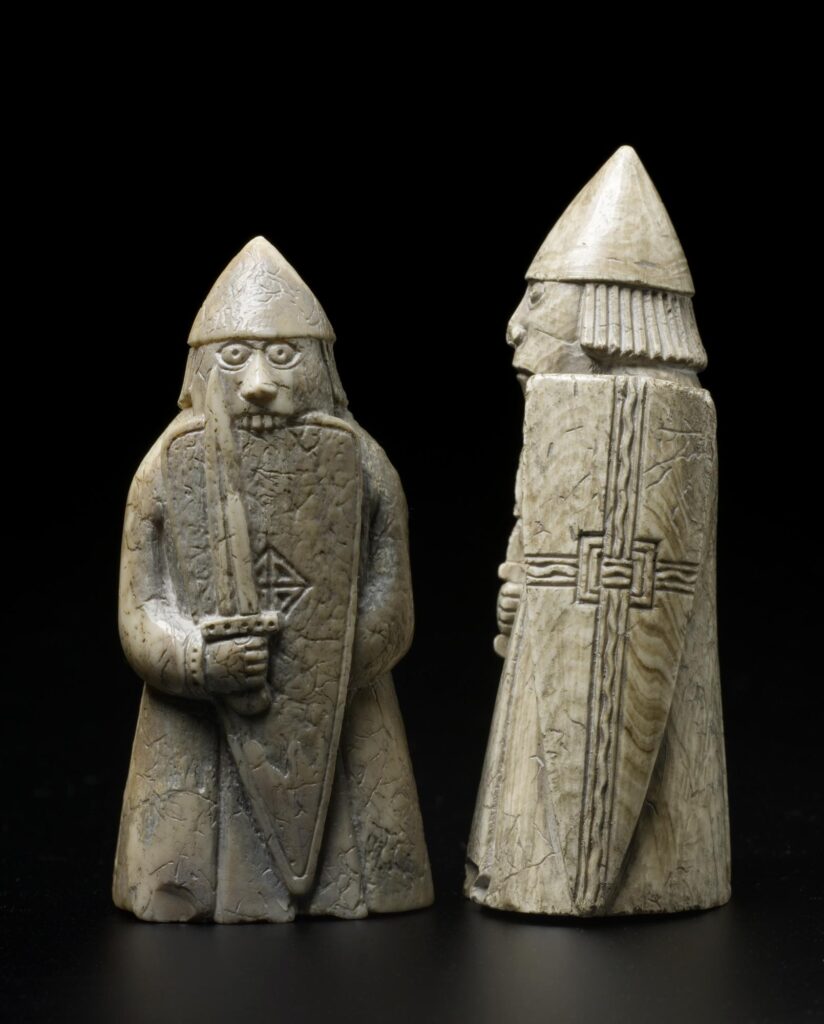
Medieval battles have always been about strength, discipline, and honor.
But behind every clash of shields and axes there is also something else: consistency, progress, and comparison.
Magna Carta has always aimed to unite medieval tradition with the tools of the modern world. The introduction of an ELO-based rating system for 7 vs 7 tournaments is a natural step in that direction.
Why an objective rating matters
In any competitive discipline, especially one as physical and complex as historical medieval battles, subjective evaluation quickly reaches its limits.
Reputation, loud victories, or isolated performances do not always reflect real strength.
An objective rating system allows us to:
• Compare teams across different tournaments and countries
• Track long-term progress, not single results
• Reward consistency, not just occasional success
• Create transparent criteria for seeding, invitations, and status
The goal is not to replace the spirit of medieval competition, but to give it a clear and fair framework.
Why ELO?
The ELO rating system has been used for decades in chess — another activity deeply rooted in medieval culture. Its strength lies in simplicity, adaptability, and fairness.
ELO does not just count wins and losses. It evaluates who you defeated and how strong they were at the moment of the fight.
Defeating a stronger opponent brings more rating points.
Defeating a weaker one brings fewer.
Losing to a stronger opponent costs less than losing to a weaker one.
This creates a living, self-adjusting system.
How the Magna Carta ELO system works
Every team entering the Magna Carta rating system starts with a default rating of 1200 points.
This allows:
• New teams to enter the system on equal footing
• Ratings to grow organically through competition
• Long-term comparison without artificial inflation
Before each fight, the system calculates the expected outcome based on the ratings of both teams.
In simple terms:
• If you face a stronger team, your expected chance of winning is lower
• If you face a weaker team, your expected chance is higher
After each fight, the rating is updated.
For teams fighting for the first time, a higher calibration coefficient is applied. Once a team has accumulated enough battles, the K-factor returns to its standard value, ensuring rating stability.
Tested in battle
The Magna Carta ELO system is not theoretical.
It was first tested during the tournament A New Hope in France, where it demonstrated: logical rating shifts, clear differentiation between teams and stability after multiple fights.
The tournament Magna Carta: Monaco. Malizia will further contribute to the system, refining rankings and increasing overall accuracy.
The more battles are fought, the more precise the ratings become.
Join the system
By participating in Magna Carta 7 vs 7 tournaments, teams automatically become part of the ELO ranking.
Fight more.
Fight stronger opponents.
Build your rating.
And let your position be defined not by words, but by results.
